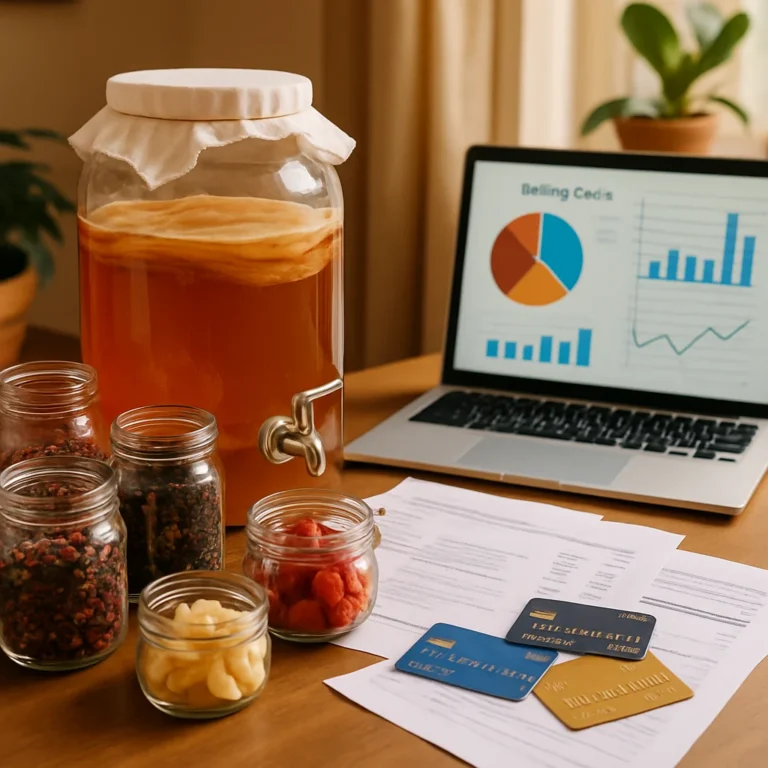
Did you know that 60% of small businesses rely on credit cards for financing?
This statistic highlights the crucial role that credit cards and bank financing play in launching successful ventures.
In today’s economy, starting a home-based specialty coffee roasting and subscription box side hustle can be both a passion project and a lucrative opportunity.
By understanding how to maximize rewards points, secure loans, and invest profits into beverage and consumer goods ETFs, you can set yourself up for everyday passive income growth.
In this article, we will explore step-by-step strategies that will guide you through leveraging financing options effectively while optimizing your coffee business.
Understanding Credit Cards for Your Coffee Roasting Business
Credit cards can be a powerful tool when launching a home-based specialty coffee roasting business.
They not only provide a means for managing expenses but also offer valuable rewards and benefits that can significantly impact your bottom line.
Utilizing the right credit cards tailored for business expenses can help you maximize rewards points, which can be reinvested into your coffee venture or personal finances.
Benefits of Using Credit Cards for Business Expenses
One of the primary advantages of using credit cards for your coffee roasting business is the ability to earn rewards points.
These points can be accumulated through everyday purchases, including coffee beans, equipment, and packaging materials.
For instance, if you choose a credit card that offers 2% cash back on all purchases, your monthly expenses of $1,000 could yield $20 back.
This can add up quickly, especially when you are purchasing supplies in bulk.
Additionally, many credit cards come with introductory bonuses that can further enhance your rewards.
For example, some cards offer a bonus of 50,000 points after spending a certain amount within the first three months.
This can be particularly beneficial when starting your business, as it provides you with extra resources to invest in marketing or improving your roasting setup.
Moreover, using credit cards allows for better cash flow management, as you can make purchases now and pay them off later, provided you manage your payments wisely.
Types of Credit Cards Suitable for Coffee Businesses
When selecting a credit card for your coffee roasting business, consider options specifically designed for small businesses.
These cards often provide enhanced rewards on categories relevant to your business, such as office supplies or food services.
Additionally, look for cards that offer no annual fees or those with low-interest rates, as these can save you money in the long run.
Another option is a credit card with travel rewards, which can be advantageous if you plan to attend coffee trade shows or supplier meetings.
By accumulating points on travel expenses, you can reduce costs associated with business travel.
As you navigate the world of credit cards, remember to read the fine print on interest rates and fees, ensuring you select a card that aligns with your business goals.
In conclusion, understanding the benefits and types of credit cards available can pave the way for financial success in your coffee roasting side hustle.
By actively managing your credit and maximizing rewards, you can reinvest in your business and build a sustainable income stream.
Securing Bank Financing for Your Home-Based Business
Launching a home-based specialty coffee roasting business requires careful financial planning. To achieve your goals, securing bank financing can be a crucial step.
In this section, we will explore the types of loans available for small businesses, how to prepare your business plan for financing, and the importance of understanding interest rates and repayment terms.
Types of Loans Available for Small Businesses
When considering financing options, it’s essential to understand the various types of loans available. Small business loans can come in several forms, including traditional bank loans, SBA loans, and lines of credit.
A traditional bank loan typically offers a lump sum that you repay over a fixed period with interest.
This option may be suitable for purchasing equipment or expanding your roasting capacities.
On the other hand, SBA loans are partially guaranteed by the Small Business Administration, which can make them easier to obtain for startups.
These loans often have lower interest rates and longer repayment terms, making them attractive for new businesses looking to finance their specialty coffee ventures.
Another option is a business line of credit, which provides flexibility by allowing you to borrow up to a certain limit and only pay interest on the amount you use.
This can be particularly beneficial in managing cash flow for your subscription box service, enabling you to purchase inventory as needed.
Preparing Your Business Plan for Financing
Once you’ve identified the type of loan that fits your needs, the next step is to prepare a comprehensive business plan.
This document is crucial for convincing lenders of your business’s potential.
Your plan should outline your roasting processes, target market, marketing strategies, and financial projections.
Include detailed information about how you plan to utilize the funds.
For example, if you’re seeking a loan to purchase a high-quality coffee roaster, explain how this investment will enhance your product quality and ultimately lead to higher sales in your subscription model.
Additionally, understanding interest rates and repayment terms is vital.
Interest rates can vary significantly based on the lender and your creditworthiness.
Make sure to compare offers and consider the total cost of borrowing.
A lower interest rate can save you money over the life of the loan, which can be reinvested into your business.
In conclusion, securing bank financing is a foundational step in launching your coffee roasting side hustle.
By understanding the types of loans available and preparing a solid business plan, you can position yourself for success.
As you navigate this process, remember to keep your financial goals in mind, especially when considering allocating profits into beverage and consumer goods ETFs for ongoing passive income growth.
Allocating Profits into ETFs for Passive Income Growth
Investing your profits wisely is crucial for long-term financial success. For those launching a home-based specialty coffee roasting and subscription box side hustle, allocating profits into Exchange-Traded Funds (ETFs) can be an excellent strategy for generating passive income.
ETFs provide exposure to a diversified portfolio of assets, including beverage and consumer goods companies, which can enhance your investment growth.
Understanding ETFs and Their Benefits
ETFs are investment funds that are traded on stock exchanges, similar to individual stocks.
They typically hold a collection of assets, such as stocks, bonds, or commodities, providing investors with a convenient way to gain exposure to various sectors.
One of the main advantages of investing in ETFs is diversification; by investing in a single ETF, you can spread your risk across multiple companies.
This is particularly beneficial in the beverage sector, where market conditions can fluctuate.
Additionally, ETFs often have lower expense ratios compared to mutual funds, making them a cost-effective option for investors.
For instance, if you decide to invest in a beverage ETF that includes leading coffee brands, you not only benefit from potential capital appreciation but also from the dividends paid by those companies.
This dual-layer income stream can significantly boost your earnings over time.
Choosing the Right Beverage and Consumer Goods ETFs
Selecting the appropriate ETFs is essential for maximizing your profits.
Look for funds that focus on consumer goods and beverage sectors, particularly those that include companies with a strong market presence in specialty coffee.
Research the fund’s performance history, management fees, and the underlying assets within the ETF.
For example, an ETF that tracks coffee-related stocks may offer exposure to companies involved in coffee production, distribution, and retail.
This can align well with your coffee roasting business, as you can benefit from industry trends while managing risk through diversification.
Additionally, consider allocating a portion of profits into other consumer goods ETFs that focus on products often purchased alongside coffee, such as snacks or kitchen appliances.
This strategic approach can help to capitalize on consumer behavior.
In conclusion, allocating profits into ETFs is a fantastic way to ensure ongoing growth from your coffee roasting side hustle.
By understanding the benefits of ETFs, choosing the right funds, and maintaining a diversified portfolio, you can create a sustainable path to passive income.
For more insights on financing strategies, check out our article on Credit Cards and Bank Financing for Launching Your Custom Board Game Business.
Conclusion
In this article, we delved into the essential strategies for leveraging credit cards and bank financing to launch your home-based specialty coffee roasting and subscription box side hustle.
You now have the tools to maximize rewards points, secure necessary loans, and wisely allocate your profits into beverage and consumer goods ETFs for sustainable passive income growth.
It’s time to take action: start implementing these strategies today to elevate your coffee business to new heights.
Your journey towards financial independence and a fulfilling side hustle begins now!